
September Real Estate Market Watch: Navigating a Market in Wait-and-See Mode

Homebuyers remained in a holding pattern in September as economic uncertainty, shifting borrowing costs, and labor market softening weighed on overall activity across the Greater Toronto Area (GTA). While sales volume slowed, a parallel pullback in new inventory helped stabilize home prices.
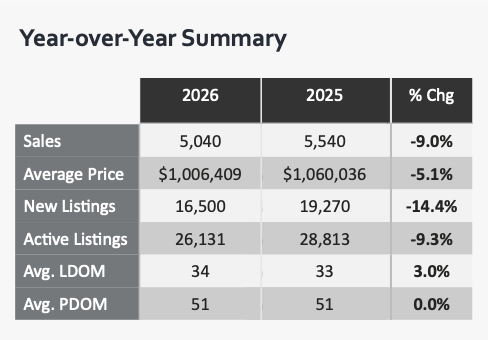
Key Housing Market Statistics (Overall vs. Detached Homes)
Median Sale Price:
Overall GTA Market: The median selling price across all property types stood at \$860,000. The average selling price was \$1,006,409, down 5.1% year-over-year and down 0.5% month-over-month from \$993,604 in August.
Detached Home Contrast: Single-family detached homes commanded a significantly higher median selling price of \$1,100,000 (with an average price of \$1,292,016, down 8.7% YoY), illustrating the substantial price premium detached properties maintain over the broader market.
Total Number of Transactions:
Overall GTA Market: REALTORS completed 5,040 home sales in September. This reflects a 9.0% year-over-year decline and a 5.2% month-over-month decrease on a seasonally adjusted basis.
Detached Home Contrast: Detached properties accounted for 2,399 completed sales, representing 47.6% (nearly half) of all market transactions. This confirms that single-family homes remain the primary driver of total trading volume across the region.
Total Number of Listings:
Overall GTA Market: Total active inventory ended the month at 26,131 properties (down 9.3% YoY). New listings came in at 16,500, dropping 14.4% year-over-year and edging lower month-over-month.
Detached Home Contrast: Active detached inventory totaled 12,321 properties (with 8,045 new detached listings). Detached homes make up 47.1% of all active GTA inventory, demonstrating that seller supply pullbacks in the detached segment closely match overall board-wide inventory contractions.
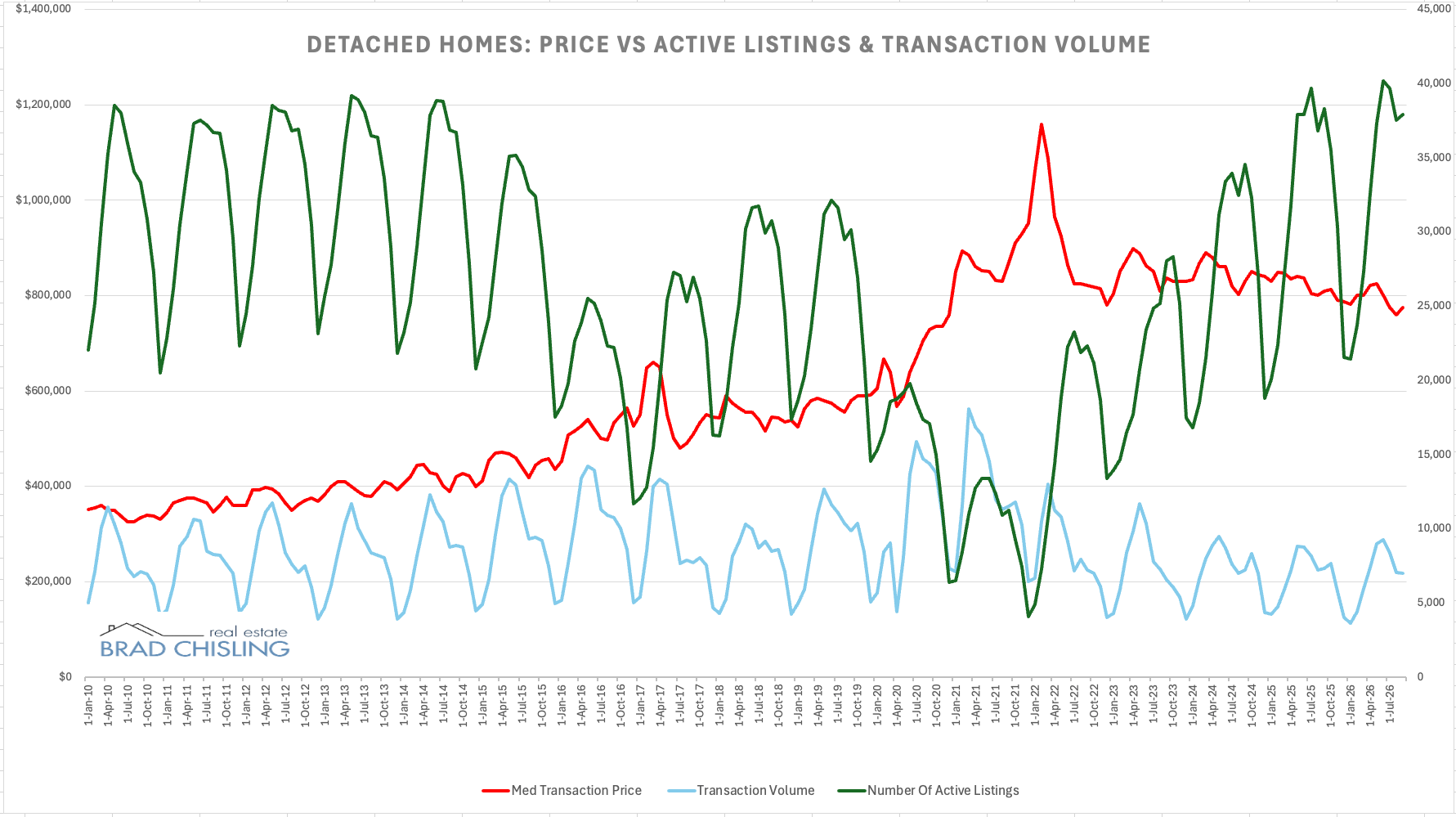
3 Key Reasons Behind the Current Market Situation
1. Surging Fixed Mortgage Rates:
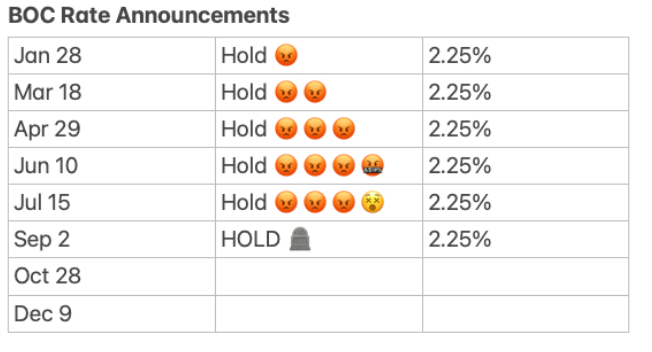
Global bond yield spikes—fueled by persistent US inflation, heavy AI infrastructure borrowing, and Middle East oil risks—forced Canadian lenders to raise 5-year fixed rates by 10 to 50 basis points. Fixed rates now sit approximately 110 basis points above variable rates, raising qualification hurdles and upfront borrowing costs for buyers.
2. Cooling Economy & Job Losses:
Canada shed 110,000 jobs over August and September (68,000 in September alone), pushing the national unemployment rate up to 6.5%. Household financial pressure is rising, reflected in a 4.0% year-over-year surge in consumer insolvency filings.
3. Weakening Consumer Sentiment:
Buyer confidence has dropped back to multi-year lows, keeping prospective buyers on the sidelines despite lower prices. Purchasing intent is delayed rather than lost, building up substantial pent-up demand for when economic stability returns.
Categories
Recent Posts